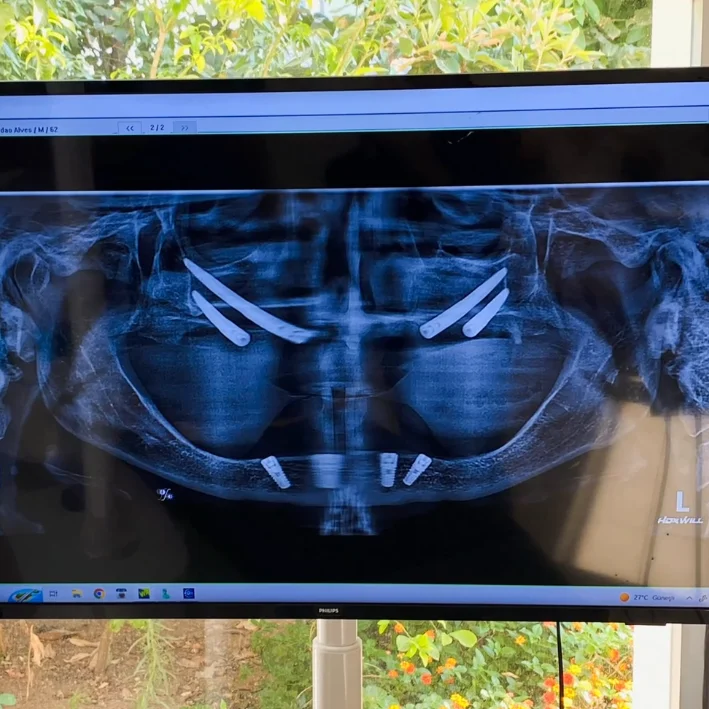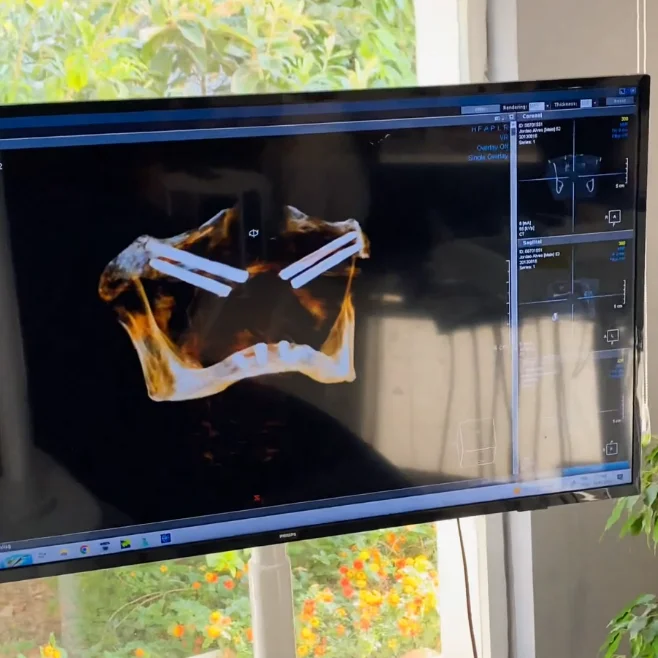
What is Zygomatic Implants or Cheekbone Implants?
Zygomatic Dental Implants & Turkey, Antalya, Konyaaltı
You can see our Zygomatic implants page with this link.
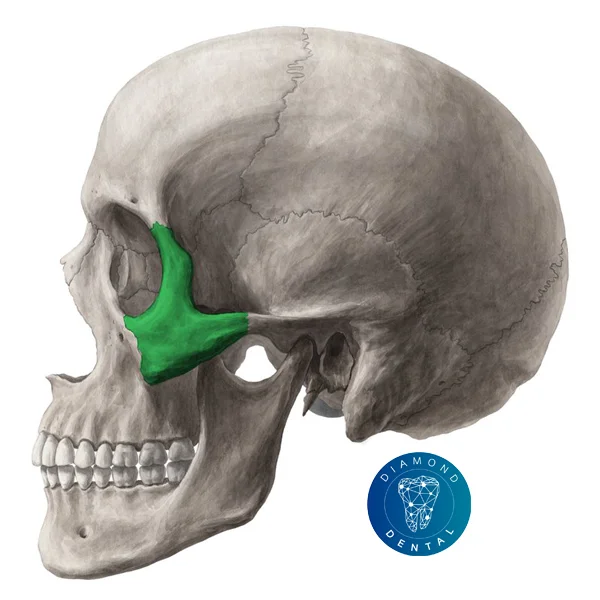
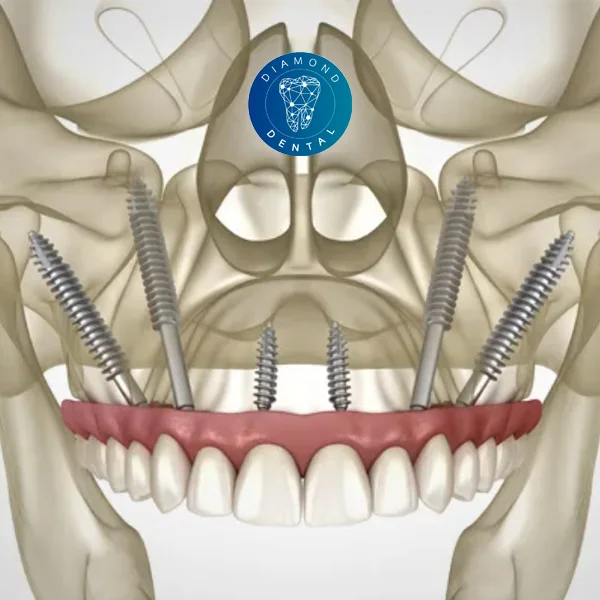
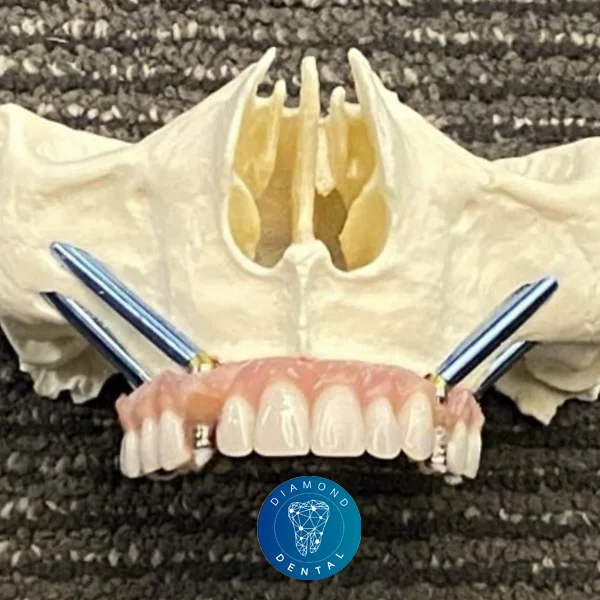
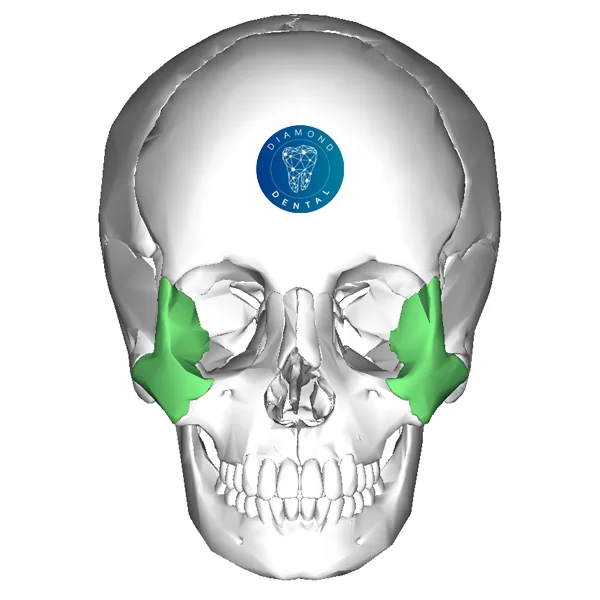
The zygoma bone, commonly known as the cheekbone, is a part of the skull. A zygomatic implant is a type of dental implants applied to the upper jaw. This type of implant has emerged with recent technological advancements. It takes a bit longer to place than a regular implant and is applied in a crosswise manner. These implants are supported by the zygoma bones.
What Should Be Considered Before Getting a Zygomatic Implant?
Before dental implant procedures, precise diagnosis and planning stages are necessary. In the case of zygomatic implants, these stages must be conducted even more meticulously.
A patient’s CT scan should be taken to examine the anatomical structure of the zygoma region (upper jaw). Zygomatic implants pass very close to the sinus area; therefore, it is crucial to have an ENT specialist check if there are any pathologies in the sinus area before the procedure.
Evaluating the upper jaw (maxilla) bone is crucial. The number of zygomatic implants to be placed or whether the treatment will proceed depends on this evaluation. If you want to see our Zygomatic Implant Patient’s Reels Video please Click this link!
In What Situations Are Zygomatic Implants Preferred? What Is Zygoma?
A zygomatic implant is a type of implant applied to the upper jaw. These implants are supported solely by the zygoma bones. The name “zygomatic implant” is derived from the bone that supports it. This treatment is applicable to patients with extreme bone loss in the upper jaw, where dental implant placement is not possible, and where no fractures are detected in the zygomatic bones. It provides a solution to the patient’s edentulism problem.
How Is a Zygomatic Implant Placed, and Is There a Risk of Failure?
Zygomatic implants are applied similarly to regular dental implants. For easier procedure execution and patient comfort, zygomatic implants are usually placed under general anesthesia or sedation. However, in some cases, they can also be placed under local anesthesia.
The structural quality of the zygoma bone increases the success rate of zygomatic implants. The failure rates for zygomatic implants are quite low. The success rate achieved with zygomatic implants is at least as high as that achieved with dental implants.
What Criteria Should Be Considered When Choosing a Dentist or Hospital for Zygomatic Implants?
Zygomatic implants involve a more complex procedure. Therefore, patients considering zygomatic implants should be very careful when choosing a hospital and dentist. Patients should evaluate the hygiene conditions of the clinic, the knowledge and experience of the oral surgeon, and whether the clinic or hospital provides support for tomography, general anesthesia, or sedation.
Cheekbone Implants: A Solution for Upper Jaw Bone Loss
Zygomatic implants, also known as cheekbone implants, are a specialized solution for patients who lack sufficient bone density in the upper jaw, where traditional dental implants cannot be placed. These implants are anchored in the zygomatic bone, providing a stable foundation without the need for bone grafts. This procedure is particularly beneficial for those with significant bone loss, allowing them to achieve stable and durable dental restorations. The zygomatic implants procedure involves placing longer implants at an angle, engaging the dense zygomatic bone to ensure a secure fit.
Choosing the Right Provider for Zygomatic Implants
Patients considering dental implants for the upper jaw often choose zygomatic implants due to their high success rates and the ability to avoid additional surgeries. It’s crucial to select a skilled dental team experienced in this technique, as precise planning and execution are essential for optimal results.
Clinics offering comprehensive services, including advanced imaging and sedation options, can enhance patient comfort and safety during the procedure. By choosing a reputable provider, patients can achieve a natural-looking, fully restored smile, benefiting from the stability and longevity of zygomatic bone dental implants.